
So the first time I heard the phrase Presbyterian Church in America, I’ll be honest—I assumed it was just… a Presbyterian church. In America. Revolutionary, right?
I didn’t realize it was its own denomination with its own story, convictions, structure, and very specific theological flavor. It’s like thinking all coffee is the same and then walking into a third-wave café where someone starts explaining the altitude at which your beans were grown.
Suddenly you’re nodding like you understand.
You don’t.
That was me.
And then I actually visited a PCA church.
And yeah. It’s different. Not in a weird-cult way. More like a “ohhh, so this is what you’re about” way.
Let me tell you how I stumbled into all this.
The Sunday I Accidentally Met Reformed Theology
A friend invited me to his church. “It’s PCA,” he said casually.
I nodded like I knew what that meant.
Inside, the service felt… grounded. Structured but not stiff. No fog machines. No laser lights. (Which is fine—I’ve been to those too. Variety is the spice of church life.)
The sermon? Deep. Like, “I should’ve brought a notebook and maybe a thesaurus” deep.
That’s when I started learning about Reformed theology explained—or at least attempted to understand it without my brain overheating.
The Presbyterian Church in America is rooted in Reformed theology, drawing heavily from the teachings of John Calvin. If you’ve heard phrases like “the sovereignty of God” or “the doctrines of grace,” that’s the neighborhood we’re in.
And I remember sitting there thinking, Okay… this is serious Christianity.
Not in a scary way. More in a “we’re going to wrestle with big ideas and not apologize for it” way.
Wait—What Actually Is the Presbyterian Church in America?
So here’s the quick backstory (minus the textbook dryness):
The Presbyterian Church in America—usually just called the PCA—was founded in 1973. It split from the older Southern Presbyterian denomination over concerns about theological drift.
Translation? They wanted to hold firmly to historic, conservative Presbyterian beliefs.
Now, “conservative” can mean a million things depending on context, but in this case, it primarily refers to theological convictions—like strong biblical authority and traditional views on doctrine.
It’s not the same as the Presbyterian Church (USA), which is a different and generally more progressive Presbyterian body.
And yes, that distinction matters to them.
A lot.
Presbyterian Church Governance (AKA: Why There’s No Single Boss)
One thing that genuinely surprised me was the structure.
There’s no pope. No celebrity megachurch pastor at the top calling all the shots.
Instead, Presbyterian church governance works through elders. The word “presbyterian” actually comes from the Greek word for elder.
So each local church is led by a group of elders—some are teaching elders (pastors), others are ruling elders (lay leaders). Decisions get made collectively.
And honestly? I kinda like that.
Because let’s be real. Humans are… human.
Spreading leadership out feels wise. Accountable.
I once worked under a micromanaging boss who insisted on approving the font choice in emails. So the idea of shared leadership? Big fan.
Worship Style: Reverent but Not Robotic
If you’re picturing super rigid formality, slow down.
Yes, PCA worship tends to be structured. There’s usually a call to worship, confession of sin, assurance of pardon, sermon, communion (sometimes weekly, sometimes monthly).
But it’s not cold.
At least the one I visited wasn’t.
People laughed at appropriate moments. Kids squirmed in pews. A baby cried during prayer and nobody panicked.
It felt… normal.
Reverent, but not theatrical.
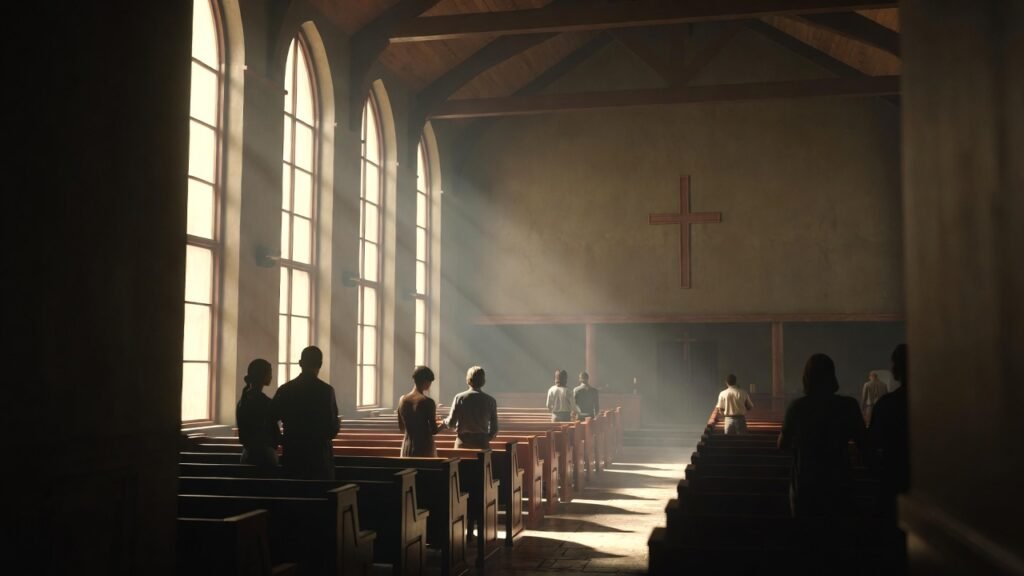
There’s something calming about the simplicity.
No giant screens flashing sermon titles in neon fonts.
Just Word. Prayer. Song.
PCA Beliefs: The Big Anchors
Okay, here’s where I risk oversimplifying, but stick with me.
The Presbyterian Church in America strongly affirms:
- The authority of Scripture
- The sovereignty of God
- Salvation by grace alone through faith alone
- Historic confessions like the Westminster Confession of Faith
The Westminster Confession isn’t exactly light bedtime reading. It’s dense. Detailed. Very 1600s.
But it acts like a theological roadmap.
And I kinda respect that.
Because in a world where opinions change every Tuesday, there’s something about saying, “We’re standing here.”
Now, do I understand every nuance? Absolutely not.
There were moments during that sermon where I felt like the theological equivalent of someone watching Inception for the first time.
Wait—are we in a dream within a dream? Or a covenant within a covenant?
Still. I appreciated the depth.
What Sets the PCA Apart from Other Presbyterian Groups?
This is the question, right?
What actually sets the Presbyterian Church in America apart?
From what I’ve seen and read, it’s a combination of:
1. Strong Confessional Identity
They really mean it when they say they hold to historic Reformed theology.
2. Complementarian Leadership
The PCA ordains only men as elders and pastors. That’s a defining feature. It’s rooted in their interpretation of Scripture.
That’s also one of the areas where conversations can get intense. I’ve heard thoughtful arguments on all sides.
And honestly? It’s okay to wrestle.
3. Commitment to Church Planting
The PCA has been pretty aggressive—in a good way—about planting new churches across the U.S.
Not flashy church growth. Intentional expansion.
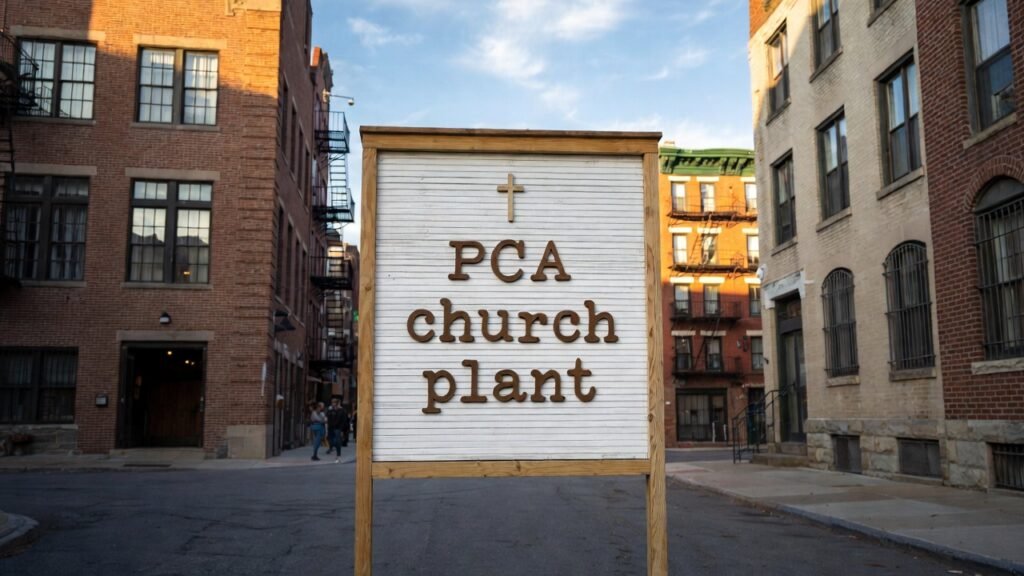
There’s something hopeful about seeing new congregations pop up in cities that desperately need community.
The Sermons. Oh, The Sermons.
If you attend a PCA church, bring your thinking cap.
Seriously.
The sermons tend to be expository—meaning they walk carefully through a passage of Scripture rather than jumping around.
It’s not uncommon for a sermon to feel like a guided tour through ancient history, Greek grammar, theology, and modern application all at once.
At one point I leaned over to my friend and whispered, “Did he just quote Latin?”
My friend nodded.
Casually.
Like this was normal.
And you know what? It kind of was.
Community Life: Not Just Brainy, Surprisingly Warm
I half-expected everyone to be super serious and intimidatingly intellectual.
Instead?
After the service, someone handed me coffee and asked where I was from. Another guy invited me to a small group.
No interrogation. No weird vibe.
Just hospitality.
And honestly, that’s what stuck with me.
You can have airtight theology, but if nobody smiles at newcomers? What’s the point.
The PCA churches I’ve encountered seem to genuinely value both truth and community.
That balance is harder than it sounds.
Is the Presbyterian Church in America for Everyone?
Probably not.
If you prefer super casual, come-as-you-are-but-we-don’t-even-plan services, this might feel structured.
If you’re uncomfortable with historic confessions or complementarian leadership, that might be a sticking point.
But if you’re someone who craves depth.
Stability.
Clear doctrinal anchors.
The Presbyterian Church in America might feel like home.
A Couple Good Places to Learn More
If you’re curious about Reformed theology in general, Ligonier Ministries (ligonier.org) has a ton of resources.
And if you want a lighter, funny perspective on church culture in general, Stuff Christians Like (stuffchristianslike.net) is still hilarious.
Because let’s be real—church life has some quirky moments.
Like that time I stood up during a hymn that nobody else stood for.
I sat down very slowly.
Pretended it was a stretch.
My Slightly Rambling Closing Thought
I’ve visited a lot of churches over the years. Some loud. Some chaotic.
The Presbyterian Church in America feels steady.
Intentional.
Confident in its theology without being frantic about it.
And in a world where everything feels like it’s constantly shifting, there’s something oddly comforting about that.
I walked in curious.
I walked out thoughtful.
And maybe that’s the best kind of Sunday.

.)