
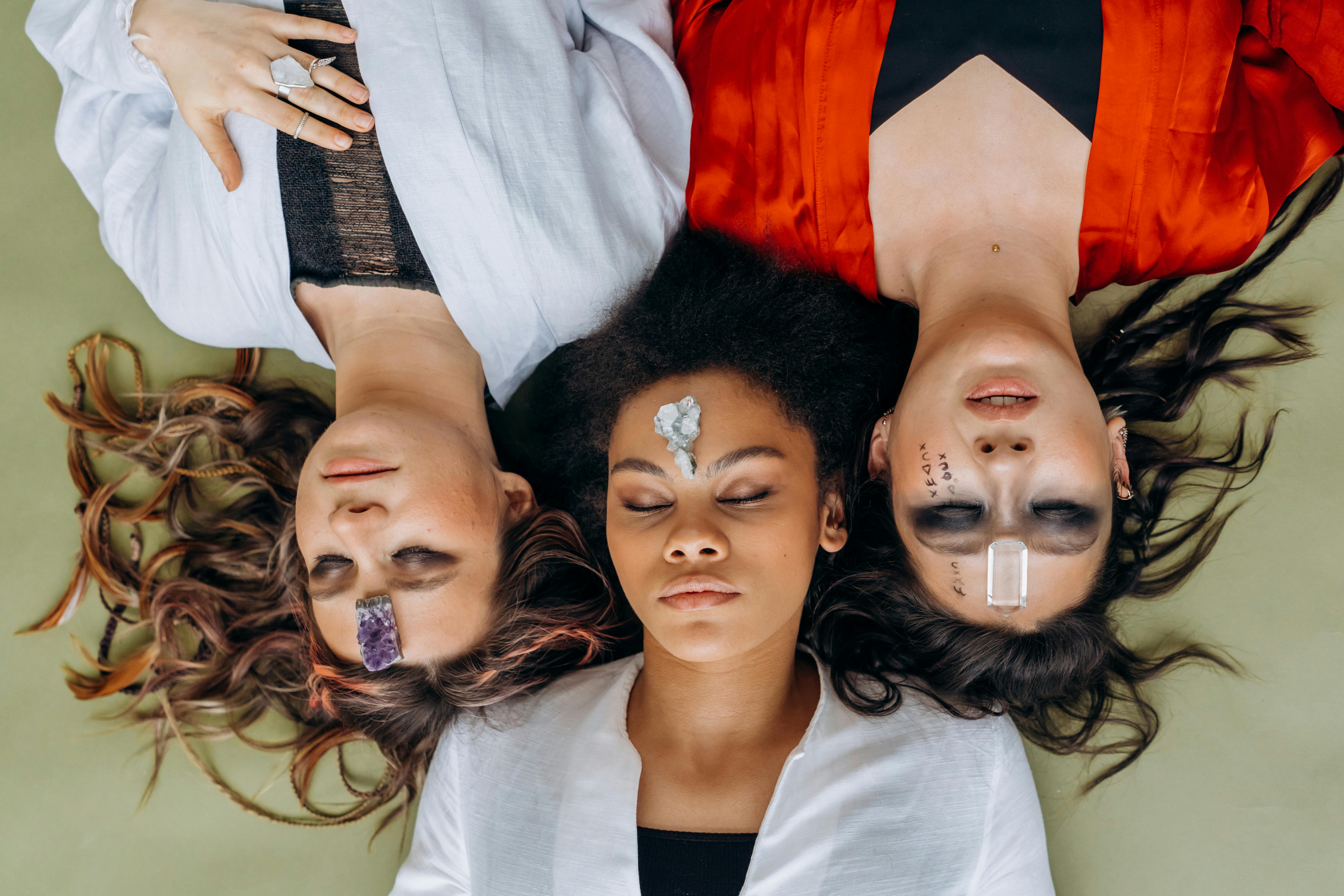
Sound baths, in which participants lie still while bowls and gongs are played, have become a common offering at American studios. The group format is not incidental to how they work.
The instruments are built for rooms
Metal and crystal bowls, gongs and chimes produce sustained tones that carry physically through a space, and their volume and decay are difficult to reproduce in headphones.
Because the sound is felt as much as heard, particularly with larger gongs, proximity to the instruments matters and a room is the natural unit.
A single practitioner playing for one listener is possible but expensive per person, so the economics push toward groups of twenty or more lying on the floor.
The instruction is unusually undemanding
Participants are asked to lie down and listen. There is no posture to learn, no sequence to follow, and no visible way to perform the practice incorrectly.
That lowers the barrier substantially for people who have found seated meditation frustrating or who feel self-conscious in a movement class.
It also means a first-time participant is doing the same thing as an experienced one, which removes the skill gradient that shapes most group practices.
The vocabulary comes from several sources
Singing bowls of metal are associated with Himalayan regions, while the quartz bowls common in American sessions are a modern manufactured product.
Explanations offered in sessions typically combine language about vibration and resonance with chakra correspondences drawn from Indian sources.
Those frameworks developed separately and are being combined recently, which is worth knowing when a session presents the pairing as ancient.
What participants consistently report
The most common reports are drowsiness, deep relaxation, drifting between sleep and waking, and occasionally unexpected emotional release.
Facilitators generally normalize all of these in advance, including falling asleep, which removes the pressure to achieve a particular state.
Researchers studying relaxation practices note that sustained low-stimulation conditions reliably produce such states, and that the specific instrument matters less than practitioners often assume.
Practical cautions facilitators give
Gongs in particular can be loud at close range, and responsible facilitators keep participants at a distance and offer ear protection to anyone who wants it.
People with sound sensitivity, tinnitus, or certain neurological conditions are commonly advised to speak with the facilitator beforehand and to sit near the door.
The practice is presented in most American settings as rest and relaxation rather than as treatment, and facilitators who claim otherwise are stepping outside what their training covers.
Facilitator training itself is unregulated, with certificate courses ranging from a weekend to many months, so the qualification behind a session varies considerably between venues.