
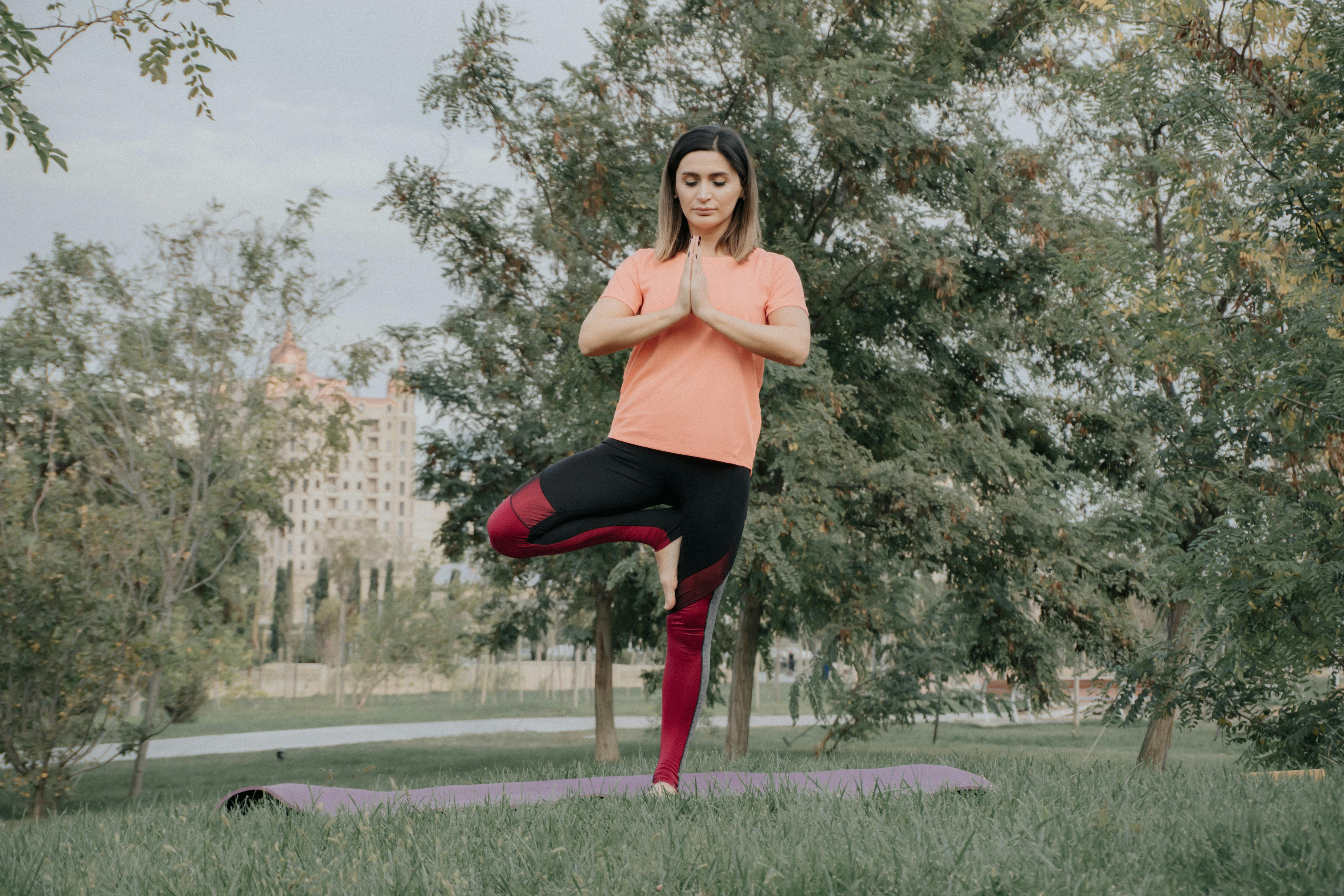
A substantial share of American yoga studios keep at least one room well above ordinary indoor temperature. The convention has a traceable origin and a straightforward appeal.
The convention came from particular lineages
Heated practice was popularized in the United States by teachers working in the second half of the twentieth century who taught fixed sequences in deliberately warmed rooms.
Some framed the heat as replicating the climate in which the practice developed, an argument about authenticity rather than about physiology.
Studios that adopted the format inherited the reasoning along with the thermostat setting, which is why explanations of the heat vary so much between schools.
Heat changes what a beginner feels immediately
Warmth raises skin temperature and produces heavy sweating quickly, so a student feels something dramatic within minutes of starting.
For a beginner uncertain whether a practice is doing anything, that immediate feedback is persuasive in a way that subtler practices are not.
Whether the sensation corresponds to a proportional physical benefit is a separate question, and one that practitioners and instructors describe differently.
Claims about flexibility are contested
Warm tissue does deform more readily, and students commonly report reaching further in a heated room than in a cool one during the same sequence.
Instructors and clinicians disagree about whether that additional range is a lasting change or a temporary one, and about whether it raises the chance of overreaching.
Because sensations of strain can be muted in a hot room, many teachers now caution students explicitly against using apparent flexibility as a target.
The format has practical demands
Heated rooms require ventilation, humidity control, and cleaning regimes that ordinary studio rooms do not, and those systems fail visibly when neglected.
Students are typically asked to arrive hydrated, to leave the room if lightheaded, and to expect the first several classes to feel harder than the sequence itself would suggest.
Instructors are trained to watch for signs of heat stress, and responsible studios treat leaving the room as normal rather than as a failure of discipline.
Why it persists as a category
Heated classes are strongly self-selecting. Students who dislike the format do not return, and those who stay tend to become committed regulars, which stabilizes attendance.
The intensity also gives the practice a clear identity in a crowded market, distinguishing it from gentler classes at a glance.
Anyone with a cardiovascular condition, a heat sensitivity, or a pregnancy is generally advised to discuss the format with a physician before starting, since the added load is real.