
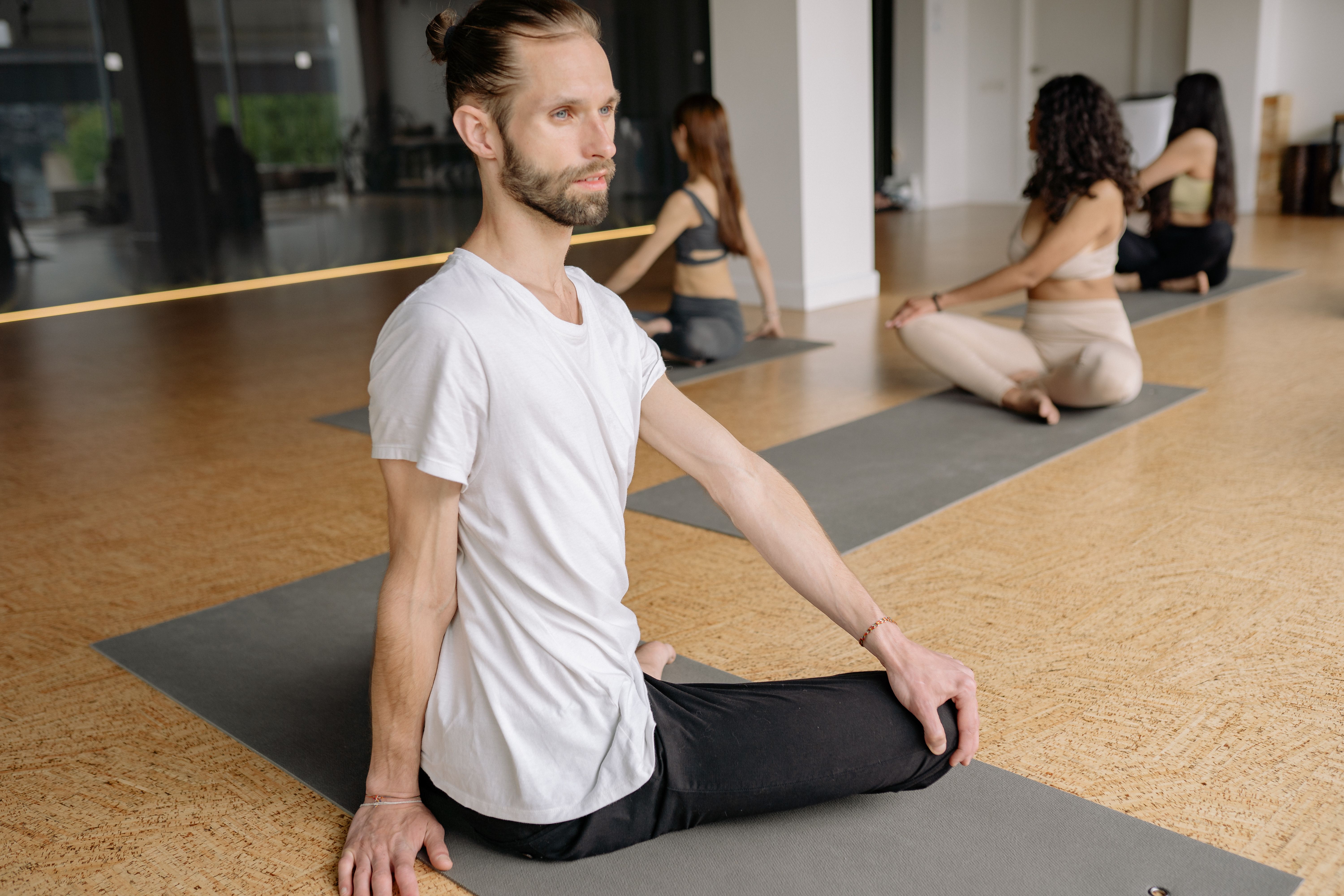
Traditions with little historical contact with each other converged on the breath as a meditation object. The convergence is not coincidence; breath has properties that few other candidates share.
It is always available
An object of attention has to be present whenever practice happens. Candles, images and sounds depend on circumstances, while breathing continues in any room and any posture.
That portability matters for traditions that ask for practice outside formal sitting. A method tied to equipment stops at the threshold of the meditation hall.
Availability also removes a class of excuses. There is no preparation to complete before beginning, which suits systems that expect daily repetition over many years.
It moves without being static
A completely still object invites the mind to fill the gap with commentary. Breath changes continuously, so attention has something to track rather than merely hold.
The cycle also supplies natural structure. Inhalation, pause, exhalation and pause give a rhythm against which a wandering mind becomes noticeable quickly.
This is why instructions often locate attention at a specific point, such as the abdomen or the nostrils. Narrowing the site sharpens the signal that attention has moved.
It sits between voluntary and automatic
Breathing continues without deliberate control, yet it can be lengthened, shortened or held at will. Very few bodily processes are accessible from both directions.
That dual character makes the breath a place where the effects of effort become visible. A practitioner watching the breath can observe their own interference in it.
Several traditions treat this as instructive rather than as a nuisance. Noticing the urge to manage the breath is a compact lesson in how attention alters what it touches.
Its rhythm reflects inner state
Breathing shifts with agitation, fatigue and calm, which gives the practitioner an unforced report on their condition. No separate assessment is required.
Because the relationship runs in both directions, slowing the breath is widely used to settle the body before longer practice. Preparatory instructions across traditions rely on this.
None of this requires a technical account of physiology. Practitioners noticed the correlation directly, and built instructions around what they could observe.
Traditions disagree on whether to control it
Some systems ask only for observation, treating any deliberate regulation as an intrusion that changes the object being watched. Others prescribe ratios, retentions and counts.
The disagreement follows from purpose. Where breathing is a mirror, it should be left alone; where it is a lever, shaping it is the entire point.
A student who mixes the two sets of instructions usually ends up straining. Knowing which role the breath plays in a given method resolves most of the confusion.