
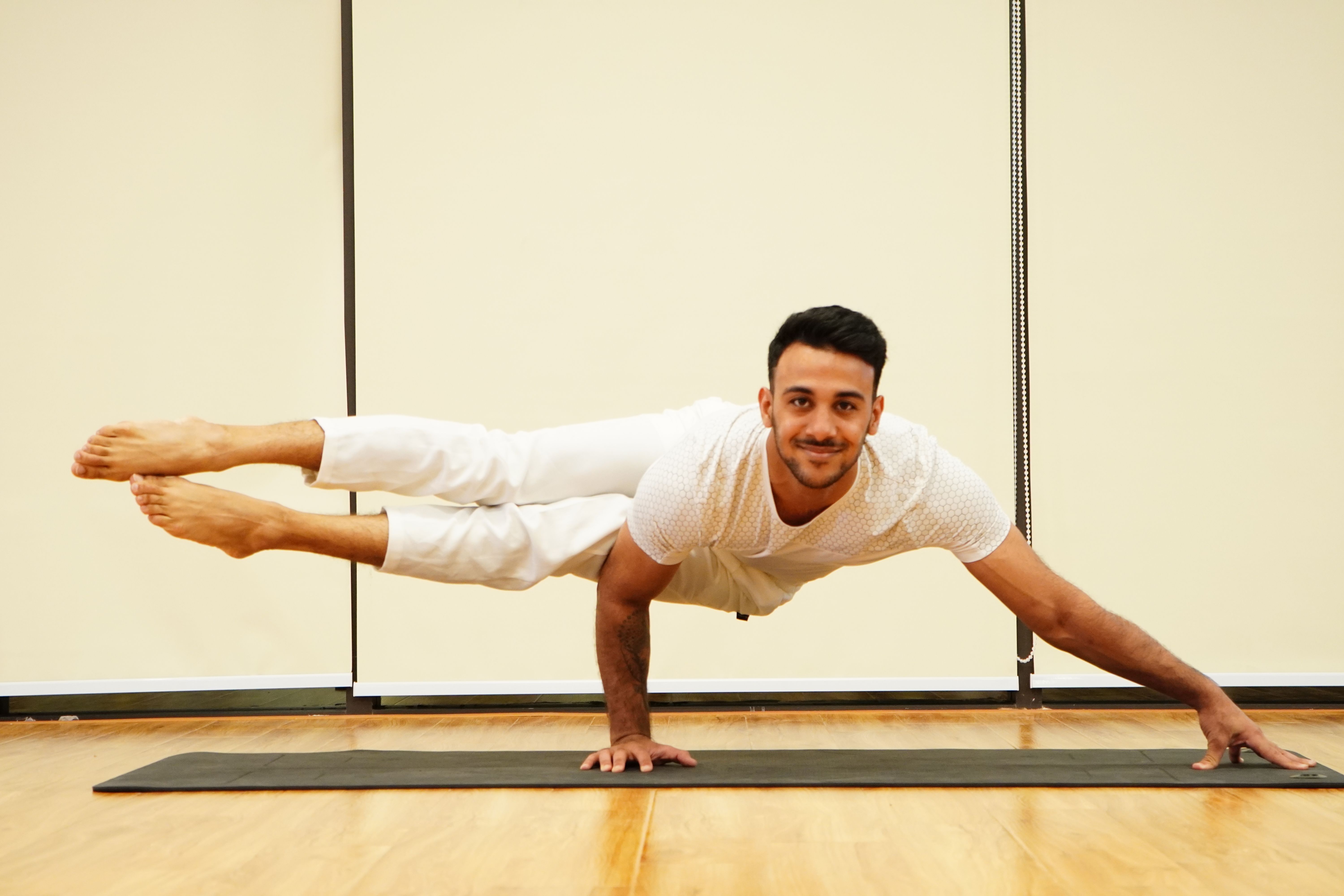
Yoga in the United States is encountered mainly as a movement class, taught alongside weights and cardio equipment. That framing came from a specific chain of transmission.
Two streams arrived at different times
Philosophical yoga reached American readers first, through lecture tours, translations and study societies that treated it as a system of thought and meditation.
Postural practice arrived later and through different channels, carried by teachers who taught sequences of physical positions to students seeking health and conditioning.
The two streams have never fully merged here. A person can hold a season pass to a studio and never encounter the philosophical material, and the reverse is equally common.
Physical culture supplied the container
An international physical-culture movement of gymnastics, calisthenics and strength training was already established when postural yoga reached wide Western audiences.
That movement had vocabulary, venues and an audience: people who exercised deliberately for health, and institutions built to house them.
Yoga entered through that opening, which made it legible as exercise. The classification determined where it was taught, who taught it, and what students expected.
Class format followed the gym, not the ashram
Group instruction on a fixed clock, with an instructor at the front demonstrating and a class following in unison, is a fitness-class structure rather than a traditional one.
Traditional transmission was closer to individual instruction over years, with practice assigned according to a particular student's constitution and stage.
The group format made yoga scalable, which is why it spread so quickly, and simultaneously made individualized adjustment difficult in a room of thirty people.
What the framing kept and what it dropped
Breath work survived the transition, since it is inseparable from the postures and easy to demonstrate. Relaxation at the end of class also carried over intact.
Ethical precepts, textual study and devotional elements were often reduced to a short reading or omitted, because they do not fit a scheduled fitness hour.
Some studios reintroduce that material deliberately. Others avoid it, either from a wish to remain secular or from caution about teaching a tradition they were not trained in.
The result is a genuinely American form
What is taught in most American rooms is not a corruption of a single fixed original, since postural yoga was itself being actively developed when it traveled.
It is a hybrid: Indian technique organized by Western exercise conventions and delivered through a class economy that neither tradition invented.
Recognizing the hybrid honestly is what allows the older material to be reintroduced as a choice, rather than assumed to have been there all along.