
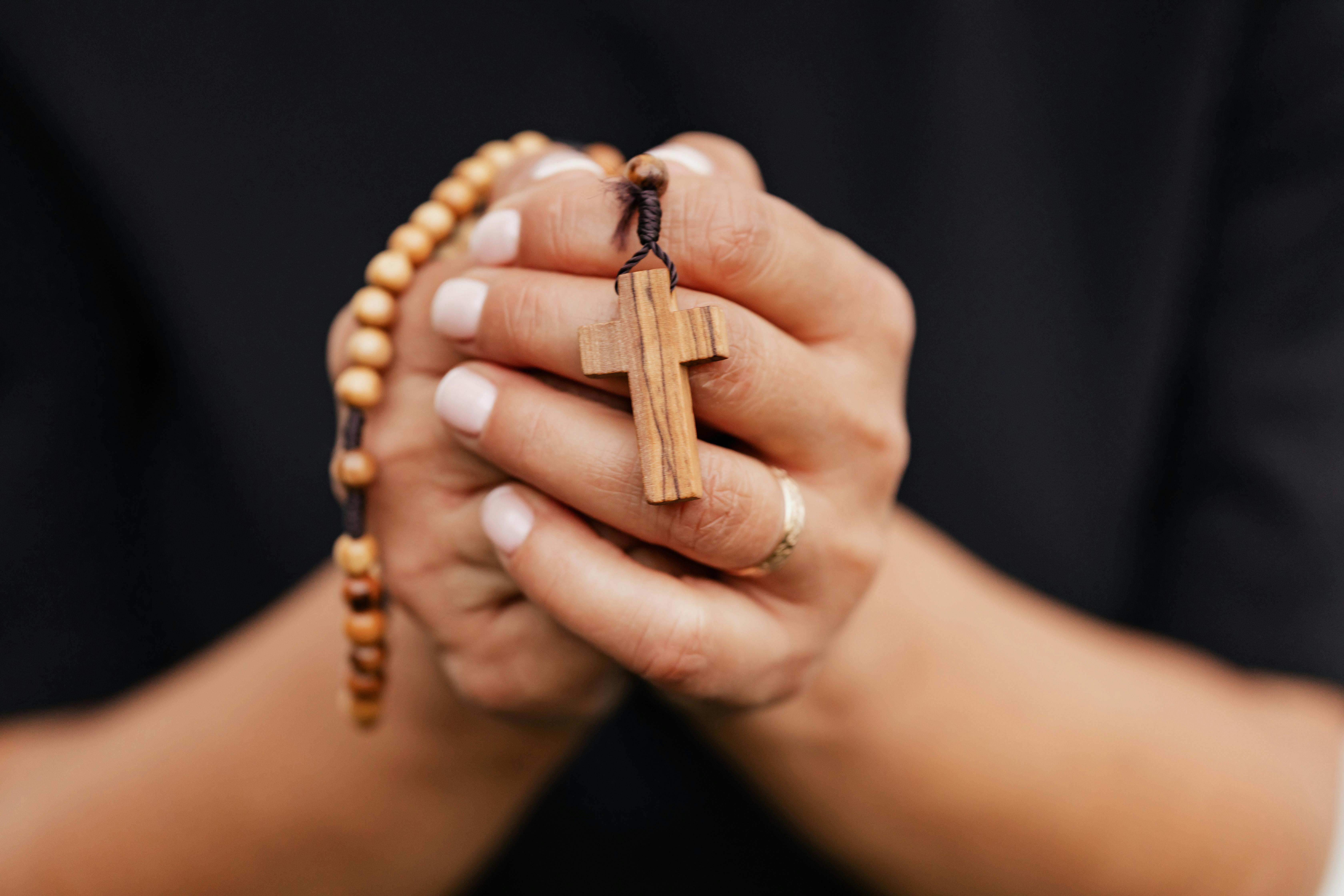
Spoken blessings before meals are among the most widely practiced religious acts in American homes. Their persistence has to do with when they occur as much as with what they say.
The meal is the reliable gathering
Households assemble for food more predictably than for anything else, which makes the table the natural site for any practice meant to happen daily.
Practices attached to unreliable occasions fade, while those attached to eating recur automatically because the occasion recurs without being scheduled.
This is why table blessings survive in families that have otherwise stopped attending services, and why they are often the last practice to go.
Different traditions bless different things
Jewish blessings are typically directed to the source of the food and are differentiated by the type of food being eaten, with distinct formulas for bread, produce and wine.
Many Christian graces thank a giver for provision and often add a petition for those without enough, folding a request into the acknowledgment.
Buddhist meal verses in several lineages direct attention to the labor and beings involved in producing the food, and to the eater's purpose in accepting it.
The words mark a boundary in time
Before the blessing, people are arriving, serving and talking. After it, the meal has begun. The formula converts a gradual gathering into a defined start.
That function is why the words are usually fixed rather than improvised. A boundary marker works by being recognizable, not by being fresh.
It also explains why interrupting the blessing feels like a breach even to participants who hold no particular belief about its content.
It is frequently the first thing children learn
Short, rhymed or sung graces are common precisely because young children can memorize them, and because the daily repetition teaches without instruction.
For many adults, the table blessing is the earliest religious language they remember, learned before any doctrine attached to it was explained.
That early association gives it emotional weight independent of belief, which is why people who have left a tradition sometimes keep the grace.
Mixed and secular households adapt it
Interfaith families often rotate formulas, use a moment of silence, or adopt wording that names gratitude without specifying its object.
Secular households sometimes keep the pause and drop the theology, retaining the transition function while removing the address.
These adaptations suggest that the practice does at least two separable things, and that a household can keep one of them while setting the other aside.
Guests complicate the arrangement, since a blessing announces a household's practice to whoever is present. Many families resolve this by asking a visitor to offer the words instead.