
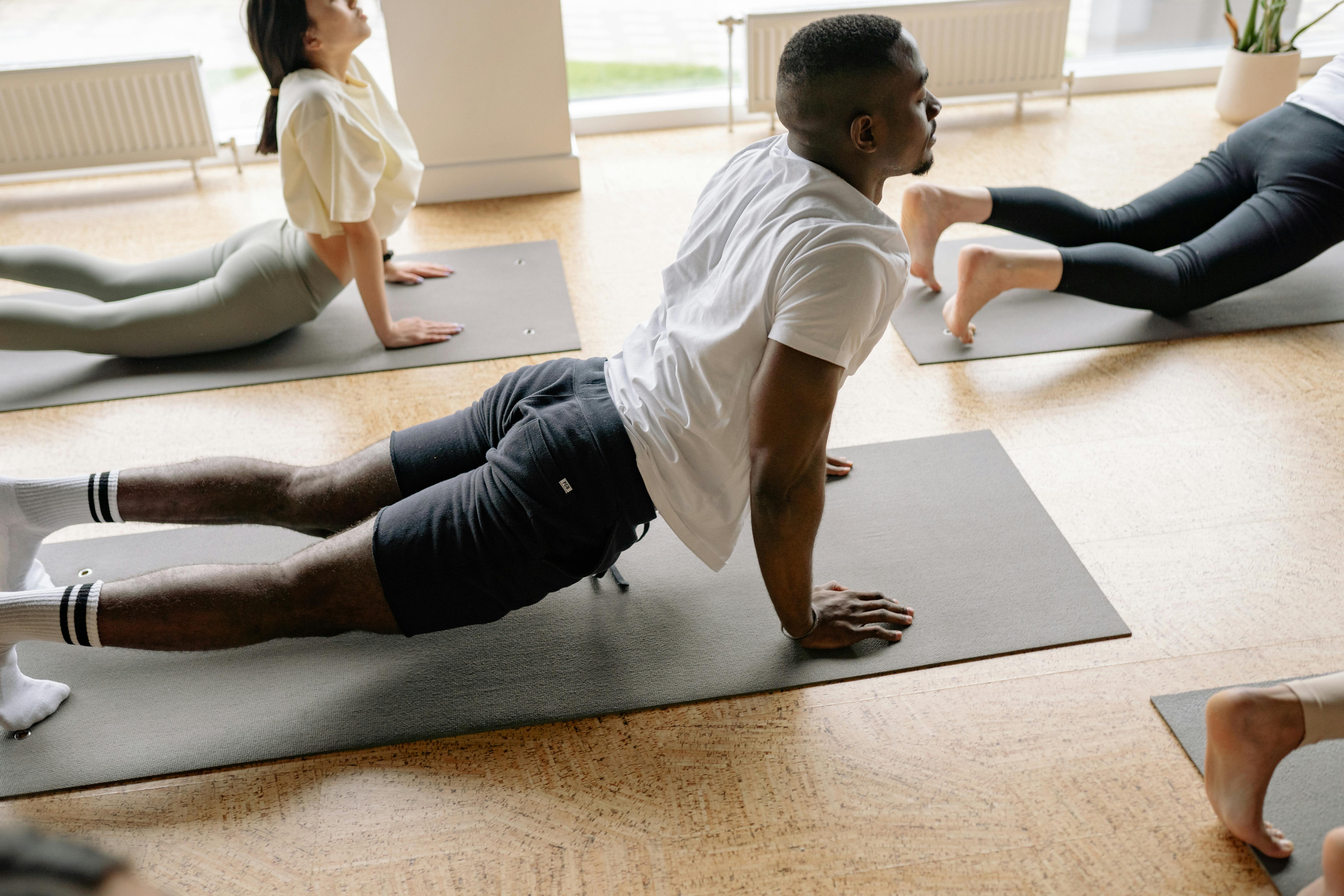
In 2026, personalized yoga is no longer a luxury, it's a standard, thanks to groundbreaking AI technology. Discover how smart yoga mats, AI-driven apps, and virtual coaches are transforming home practice, enhancing mental wellness, and offering unparalleled customization for every yogi. Explore the best AI yoga solutions to elevate your journey, optimize your health, and find your ultimate zen.
Introduction to the Topic
Welcome to 2026, a year where the ancient wisdom of yoga harmonizes seamlessly with the cutting-edge power of artificial intelligence. For centuries, yoga has been a beacon of physical, mental, and spiritual well-being, evolving through different eras and cultures. Today, we stand at the precipice of its most revolutionary transformation yet: AI-powered personalized yoga. Gone are the days of one-size-fits-all classes; the future of your practice is tailored, intelligent, and deeply intuitive. This isn't just about convenience; it's about optimizing every single pose, breath, and meditation for your unique body, goals, and even your mood on any given day. From smart mats that correct your alignment in real-time to AI coaches that adapt your flow based on your sleep patterns and stress levels, technology is no longer an external distraction but an integrated partner in your pursuit of inner peace and peak performance. Join us as we explore how AI is not just changing yoga, but redefining what it means to truly practice mindfully and effectively.
Backgrounds & Facts
The journey of yoga from ancient Indian texts to global phenomenon has been marked by continuous adaptation. From the ashrams of the Himalayas to bustling city studios and now, increasingly, to our living rooms, yoga has always found a way to meet practitioners where they are. The advent of the 21st century brought with it the digital revolution, initially through online classes and streaming platforms, making yoga more accessible than ever before. However, the true game-changer arrived with the maturation of artificial intelligence and machine learning in the mid-2020s.
The global wellness technology market, valued at over $200 billion in 2025, has seen a significant surge in AI integration. Wearable tech, initially focused on basic fitness tracking, rapidly evolved to incorporate sophisticated biometric data analysis. This paved the way for AI-driven personalized fitness, and yoga was a natural fit. Early smart yoga mats, like those emerging in the late 2010s, offered basic posture correction. By 2026, these devices are far more advanced, utilizing high-resolution pressure sensors, embedded cameras, and even thermal imaging to provide granular feedback on alignment, weight distribution, and muscle engagement. AI algorithms now process millions of data points, learning individual body mechanics, identifying subtle imbalances, and predicting potential areas of improvement or even injury risk.
Furthermore, the explosion of AI in mobile applications has created a new breed of virtual yoga instructors. These apps leverage natural language processing and computer vision to understand user input, analyze video of a user's practice, and generate dynamic sequences tailored to specific needs—be it managing chronic back pain, improving flexibility, or cultivating deeper meditative states. The data-driven insights offered by these platforms go beyond simple instruction, providing detailed analytics on progress, consistency, and the physiological impact of different practices. This fusion of ancient practice with modern analytical power represents a paradigm shift, transforming yoga from a generalized discipline into a precision wellness tool.
Expert Opinion / Analysis
“The integration of AI into yoga isn't about replacing the human element; it’s about augmenting it, making the practice more precise, safer, and profoundly personal,” states Dr. Anya Sharma, Lead AI Ethicist at the Global Wellness Institute. “For decades, a yoga instructor could only provide so much individual attention in a group setting. AI changes that. It acts as a hyper-attentive personal guide, understanding your body’s unique language in real-time.”
Experts highlight several key benefits. Firstly, injury prevention is paramount. AI systems can identify incorrect alignment or overextension before it leads to strain, offering immediate, actionable feedback. This is particularly valuable for beginners or individuals with pre-existing conditions. Secondly, tailored progression becomes seamless. Whether you're aiming for a specific pose, recovering from an injury, or simply seeking deeper relaxation, AI adapts the intensity, duration, and style of your practice. It learns your pace, your strengths, and your challenges, ensuring you're always progressing optimally without plateaus or frustration.
Yogi Master Elena Petrov, founder of the 'Mindful AI Collective,' emphasizes the accessibility aspect: “For those who feel intimidated by studios or lack access to qualified instructors, AI-powered platforms offer a non-judgmental, always-available space to practice. It democratizes high-quality, personalized yoga.” However, Petrov also cautions against complete reliance on technology. “The true essence of yoga is self-awareness and connection. While AI can guide the physical, the internal journey—the breath, the introspection, the connection to self—still requires mindful engagement from the practitioner. The best systems are those that empower, not dictate.”
The synergy between ancient principles and modern innovation is clear: AI provides the data, the precision, and the personalization, while the practitioner brings the intention, the presence, and the willingness to explore. This powerful combination is not just enhancing physical postures but is also being leveraged for mental wellness, offering guided meditations and breathwork practices that adapt to real-time biofeedback like heart rate variability, helping users manage stress, improve focus, and cultivate deeper states of calm.
💰 Best Options in Comparison (VERY IMPORTANT)
Navigating the burgeoning market of AI-powered yoga solutions can be daunting. To help you make an informed decision, we've identified the top contenders across different categories, catering to various needs and budgets. Whether you're a beginner seeking alignment help, an advanced practitioner craving deeper insights, or someone looking to integrate yoga seamlessly into a smart home ecosystem, there's an AI solution for you.
- Liforme AI Pro Mat System: The gold standard for real-time posture correction. This premium smart mat features embedded pressure sensors and a high-definition camera that connects to a dedicated AI companion app. It offers precise, visual, and auditory feedback for over 200 poses, making it invaluable for perfecting alignment and preventing injury. Ideal for serious practitioners and those investing in their home studio.
- FlowMind AI App: An all-in-one AI yoga and wellness platform. FlowMind AI leverages advanced machine learning to create truly dynamic and personalized yoga flows, meditations, and breathwork exercises. It integrates with popular wearables to pull in sleep data, stress levels, and activity, adapting your daily practice accordingly. Perfect for holistic wellness seekers who want flexibility and deep personalization from an app.
- Zenith AI Coach: A subscription-based virtual coaching service that combines AI with human oversight. Zenith provides a dedicated AI coach that learns your long-term goals and progress, designing multi-week programs. For an additional premium, you can opt for periodic check-ins with certified human yoga instructors who review your AI-generated progress reports and offer nuanced adjustments. Best for those seeking structured progression and a blend of tech and human expertise.
- AuraFlow Connect Home Studio: More than just a mat, AuraFlow Connect is a complete ecosystem. It includes a smart mat, a wall-mounted interactive display with integrated cameras, and a suite of AI-driven programs. It offers immersive class experiences, personalized flow generation, and advanced progress tracking, all within a sleek, minimalist design that integrates with other smart home devices. Geared towards tech-savvy individuals building a comprehensive smart wellness space.
To further assist your decision, here’s a comparative table:
| Product/Service | Key Features | Personalization Level | Price Range (2026 Est.) | Best For |
|---|---|---|---|---|
| Liforme AI Pro Mat System | Real-time posture correction, visual/auditory feedback, pose library | High (real-time pose-specific feedback) | $499 - $699 (one-time) | Serious practitioners, alignment perfectionists, injury prevention |
| FlowMind AI App | Dynamic personalized flows, meditations, wearable integration, biofeedback | Very High (holistic, adapts to daily metrics) | $19.99/month - $199/year | Holistic wellness, flexibility, app-first users, data enthusiasts |
| Zenith AI Coach | Long-term program design, AI/human hybrid coaching, progress tracking | High (structured, goal-oriented progression) | $49.99/month - $499/year | Structured progression, accountability, blend of tech & human touch |
| AuraFlow Connect Home Studio | Immersive classes, smart mat, interactive display, smart home integration | Very High (full ecosystem, comprehensive tracking) | $1200 - $2500 (hardware) + $29.99/month (subscription) | Tech enthusiasts, smart home users, immersive experience seekers |
Outlook & Trends
The trajectory of AI in yoga is set for even more profound innovation. By the end of the decade, we can expect to see deeper integration with augmented reality (AR) and virtual reality (VR), creating truly immersive yoga environments. Imagine practicing on a virtual beach in Bali or a mountain peak in the Himalayas, with an AI guide adapting the environment and flow to your real-time physiological and psychological state. Predictive AI will become standard, using advanced algorithms to anticipate your wellness needs. Based on your sleep patterns, stress markers, dietary input, and even genetic predispositions, AI will proactively suggest optimal yoga sequences or meditation practices to prevent imbalances before they manifest.
Ethical considerations, particularly around data privacy and algorithmic bias, will continue to be a focal point. Leading companies are already investing heavily in robust data encryption and transparent AI models to ensure user trust. The future will also likely see a greater emphasis on hybrid models, where AI-driven platforms seamlessly connect users with human instructors for advanced adjustments, workshops, or community building, ensuring that technology enhances rather than diminishes the human connection inherent in yoga. Furthermore, AI's role in therapeutic yoga is poised for significant expansion, providing highly specialized, evidence-based practices for chronic pain management, rehabilitation, and mental health support, making advanced therapeutic interventions accessible to a wider population. The evolution will move beyond just physical postures, delving deeper into pranayama (breathwork) and dhyana (meditation) with AI monitoring subtle physiological changes to guide practitioners to profound states of awareness.
Conclusion
The year 2026 marks a pivotal moment in the history of yoga, where the ancient practice embraces the future with open arms. AI-powered personalized yoga is not a passing fad; it is a fundamental shift towards a more intelligent, accessible, and effective path to well-being. By offering unparalleled customization, real-time feedback, and holistic integration with our daily lives, these innovative solutions empower us to deepen our practice, prevent injury, and unlock new levels of physical prowess and inner peace. Whether you opt for a smart mat, an intuitive app, or a comprehensive home studio, the opportunity to transform your yoga journey has never been more exciting. Embrace the future, flow with intelligence, and discover the extraordinary potential of your personalized practice. Your ultimate zen is just a smart breath away.