
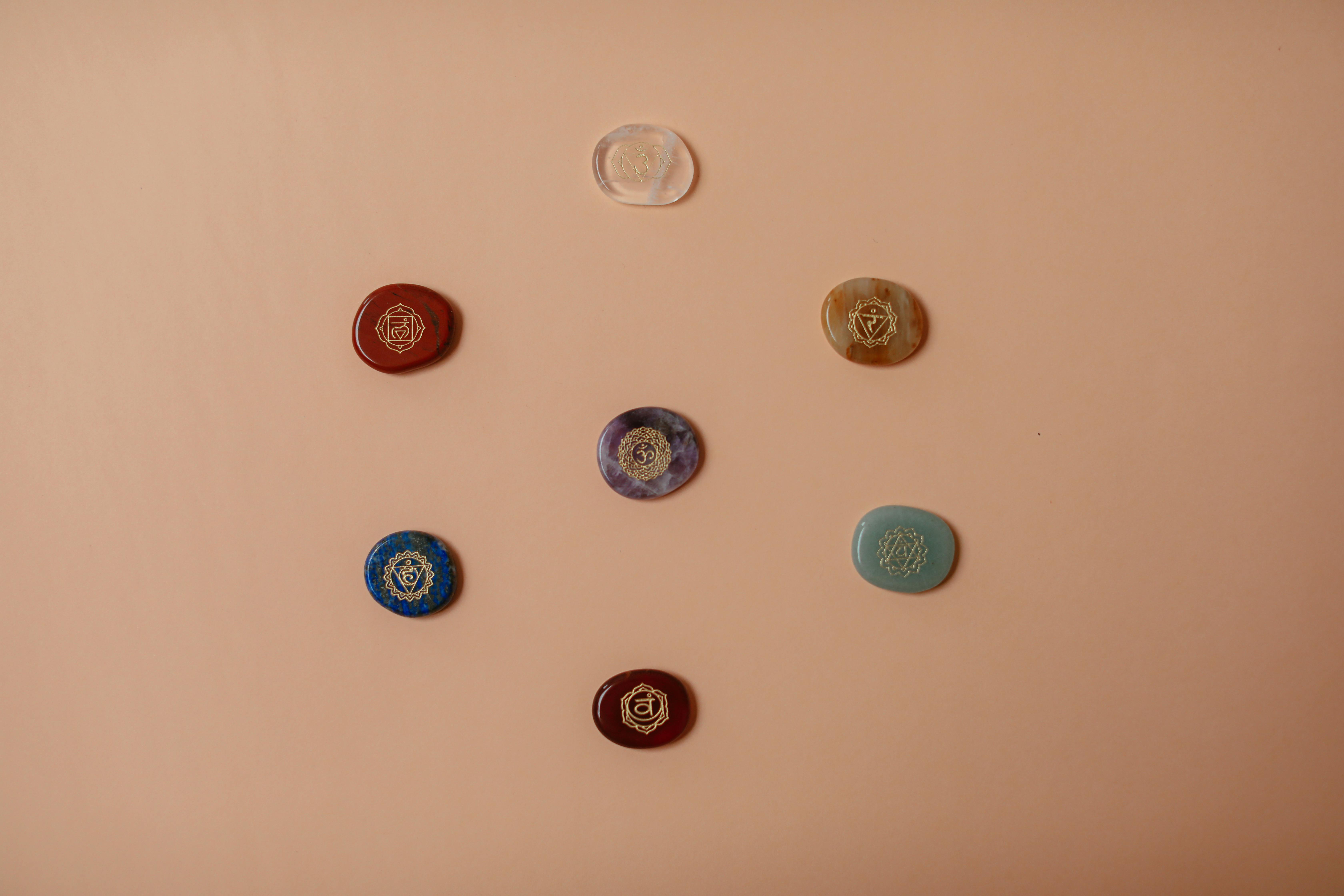
Crystals are sold and used in American spiritual practice with a vocabulary of frequency, vibration and resonance. That vocabulary has a specific history worth separating from the practice itself.
Stones carried meaning long before this language
Gemstones appear in ritual, medicine and adornment across many cultures, assigned protective or curative associations in sources ranging from ancient Mediterranean texts to Indian and Chinese materia medica.
Medieval European lapidaries catalogued stones with their supposed powers, and those catalogues were compiled and copied for centuries.
The older sources generally explain effects through correspondence and symbolism rather than through vibration, which is a much later addition.
The vibration vocabulary arrived in the nineteenth century
Nineteenth-century discoveries about electromagnetic waves entered popular culture rapidly, and invisible forces became a familiar idea to general readers.
Spiritual movements of the period adopted the vocabulary, describing thoughts, bodies and objects as vibrating at frequencies that could be attuned or raised.
The terms were borrowed for their explanatory feel rather than derived from measurement, and they have been used that way in popular spirituality ever since.
What physics actually says about crystals
Crystals are solids with regularly repeating atomic structure, and some, notably quartz, are piezoelectric, producing a voltage under mechanical stress.
That property is genuinely used in timekeeping and electronics, where a quartz element oscillates at a highly stable rate when driven by a circuit.
A stone resting on a table or in a pocket is not driven by any circuit, and the technical property does not extend to the claims made in spiritual usage.
Practitioners describe several different things
Some users describe crystals as focusing objects, similar in function to prayer beads, where the point is the attention the object organizes.
Others treat them as carrying properties intrinsically, and a third group uses them mainly as reminders of an intention, kept visible on a desk or nightstand.
These are distinct claims with distinct implications, and conversations about crystals often break down because participants are addressing different ones.
The market shapes the practice
Crystals are a substantial retail category, and the associations attached to particular stones are partly transmitted through sellers' descriptions.
Sourcing has drawn increasing scrutiny, since some stones come from mining operations with poor labor and environmental conditions that buyers rarely see.
Practitioners who take the ethical dimension of their tradition seriously have raised that supply question themselves, and it is now a live discussion within the community.
Answering it is difficult in practice, since stones pass through several intermediaries between mine and shop, and a seller often cannot say where a particular specimen was extracted.