If you had asked me ten years ago, “What is the Kingdom of God according to Scripture?” I probably would’ve said something like, “Uh… heaven? Clouds? Harps? Maybe angels in white robes floating around?”
Basically, I had it filed under afterlife stuff.
Which is wild considering how often Jesus talked about it.
Like, have you ever noticed that? Open the Gospels — especially Matthew — and it’s Kingdom this, Kingdom that. It’s basically His favorite topic. And yet I somehow grew up thinking it was mostly about what happens when we die.
I remember sitting in church once, half-listening (sorry, pastor), and hearing the phrase “the Kingdom of God is at hand.” And I thought, At hand? Like… right now?
That messed with me a little.
Because if the Kingdom of God is just heaven later, how can it be at hand now?
See? This is where things got interesting.
The Kingdom of God Isn’t Just a Place
Here’s the first thing that surprised me when I actually started reading Scripture for myself instead of relying on vague Sunday school memories:
The Kingdom of God is less about a location and more about a reign.
Yeah, I know. That sounds like something I swore I wouldn’t say — slightly theological. But stick with me.
When Jesus talks about the Kingdom of God (or “Kingdom of Heaven” in Matthew), He’s talking about God’s rule breaking into human history.
Not just later.
Now.
Which is honestly kind of mind-blowing.
Because that means the Kingdom of God explained in simple terms might be this:
Wherever God’s will is happening, that’s the Kingdom.
Not just in heaven.
Not just in church buildings.
Not just in worship songs that give you goosebumps.
But in everyday life.
In kitchens.
In classrooms.
In traffic (ugh, traffic).

Jesus and the Kingdom of God — It Was His Main Thing
When I started paying attention, I realized something kinda obvious but also kinda shocking:
Jesus didn’t walk around saying, “Hey everyone, I’m starting a new religion.”
He said things like:
“The Kingdom of God is near.”
“The Kingdom of God is like…”
“The Kingdom of God belongs to…”
He compared it to:
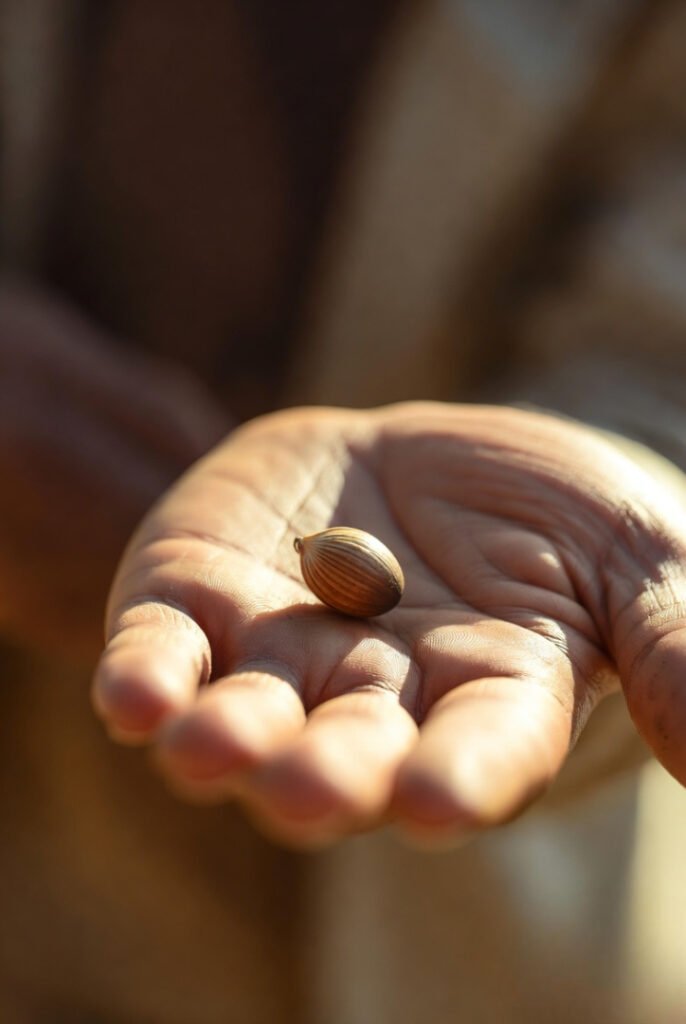
- A mustard seed
- Yeast in dough
- Hidden treasure
- A pearl of great price
None of those scream “giant political empire,” right?
Which is probably why people were confused.
Actually, scratch that. They were definitely confused.
The Jews at the time were expecting a Messiah who would overthrow Rome. Big military vibes. Sword energy. Epic revolution.
Instead, Jesus shows up talking about loving enemies and forgiving people seventy times seven.
If I’m honest? I probably would’ve been confused too.
The Kingdom of God Is Already… But Not Fully
Okay, this part took me a minute to wrap my brain around.
The Kingdom of God, according to Scripture, is both already here and not fully here yet.
I know. That sounds like I’m trying to have it both ways.
But think about it like this.
When Jesus healed people, cast out demons, forgave sins — that was the Kingdom breaking in. God’s authority pushing back darkness.
But evil didn’t disappear overnight. Rome didn’t vanish. Suffering didn’t stop.
So the Kingdom started… but it wasn’t finished.
Kind of like when you plant a tree. It’s there. It’s alive. It’s real. But it’s not towering and fully grown yet.
That’s the tension we live in.
And honestly? That explains a lot.
Why we see glimpses of beauty and justice and healing — but also heartbreak and chaos.
You ever feel that tension? Like the world is both stunning and deeply broken at the same time?
Yeah. That.
The Kingdom of God Is Upside Down
One of my favorite (and most uncomfortable) parts of the meaning of the Kingdom of God is how backwards it feels.
Jesus said:
- The first will be last
- The meek will inherit the earth
- The poor in spirit are blessed
Excuse me?
That doesn’t exactly match the American Dream.
In our culture, it’s:
- Hustle harder
- Climb higher
- Protect your brand
- Win
The Kingdom of God flips that script.
It values humility over hype.
Service over status.
Faithfulness over fame.
And if I’m being brutally honest, that rubs against my ego sometimes.
Because I like recognition. I like being right. I like winning arguments in my head at 2 a.m.
The Kingdom says, “Die to yourself.”
Which sounds dramatic until you realize it’s actually freeing.
Because chasing status is exhausting.
A Personal Moment That Hit Me
A few years ago, I had a conflict with someone close to me. And I had every reason (in my opinion) to hold a grudge.
I replayed the conversation over and over. Crafted imaginary speeches. Practiced icy politeness.
Very mature of me.
And then I read Jesus saying to forgive. Not because the other person deserved it — but because that’s how the Father treats us.
And I remember thinking, “Wait… this is Kingdom stuff, isn’t it?”
Forgiveness isn’t weakness. It’s Kingdom living.
That’s when it clicked for me: the Kingdom of God according to Scripture isn’t just a future hope. It’s a present invitation.
To live differently.
To respond differently.
To love differently.
And yeah, sometimes that feels wildly inconvenient.
The Kingdom of God and Power (Not the Way We Think)
If you look at Jesus and the Kingdom of God, you notice something strange about power.
He had it.
He calmed storms. He multiplied food. He walked on water.
But He didn’t leverage it for domination.
He washed feet.
That detail always gets me.
If I had divine authority, I probably wouldn’t start scrubbing toes.
But that’s the kind of King we’re talking about.
Which means the Kingdom reflects the character of the King.
Gentle but not weak.
Just but not cruel.
Strong but self-giving.
It’s not Game of Thrones. (Honestly, thank goodness.)
So Where Is the Kingdom of God… Really?
Here’s the part that still surprises me.
According to Scripture, the Kingdom of God shows up:
- When someone repents
- When someone chooses mercy
- When someone stands for truth
- When someone loves their enemy
It’s not flashy most of the time.
It’s quiet.
Hidden.
Like yeast in dough.
And if you’ve ever baked bread (I tried once during 2020, like everyone else), you know yeast doesn’t scream for attention. It just works through the whole batch.
That metaphor cracked me up when I first thought about it.
The Kingdom of God is like spiritual sourdough starter.
Slow. Persistent. Transforming from the inside out.
Why This Matters in 2026 (Yes, Right Now)
I don’t know about you, but the world feels loud lately.
News cycles. Social media outrage. Group chats that never sleep.
Sometimes I scroll and think, “Is everything falling apart?”
But if the Kingdom of God is real — if it’s advancing quietly, steadily — then history isn’t random chaos.
It’s moving somewhere.
That gives me hope.
Not naïve optimism. Not “everything’s fine” denial.
But grounded hope.
Because the King hasn’t abdicated.
A Couple Places That Helped Me Think This Through
If you want to go deeper (in a non-boring way), I’ve found some solid reflections over at The Bible Project (bibleproject.com). Their explainer videos about the Kingdom of God are actually engaging and not dry.
Also, I’ve read a few thoughtful essays on Relevant Magazine (relevantmagazine.com) that wrestle with how Kingdom living looks in modern culture. Worth checking out.
Not perfect. But helpful.
So… What Is the Kingdom of God According to Scripture?
It’s God’s reign breaking into the world through Jesus.
It’s already here — but not finished.
It’s upside down.
It’s humble.
It grows in hidden ways.
It shows up when ordinary people choose obedience over ego.
And it’s not just about getting to heaven someday.
It’s about heaven invading earth.
That’s the part I missed for years.
And I’ll be honest — I’m still learning.
Some days I live like the Kingdom is real.
Other days I get sucked into anxiety and ambition and pettiness.
But every time I circle back to what Scripture actually says, I feel re-centered.
Like I remember who’s actually in charge.
And that changes how I show up — at work, at home, in awkward conversations, in traffic (still working on that one).
The Kingdom of God isn’t abstract theology.
It’s an invitation.
Right now.
And honestly? That’s kinda wild.