
The first time I really heard the St. Michael Prayer, I wasn’t in some epic cathedral moment with incense floating dramatically through stained glass beams. I was half-distracted, thinking about what I was going to eat for lunch after Mass.
And then the line hit:
“Be our protection against the wickedness and snares…”
And I remember thinking, wait. Snares? Like traps? Like spiritual bear traps? What are we talking about here?
I’d heard the St. Michael Prayer a hundred times growing up. It was just something we rattled off at the end of Mass. Like the Catholic version of muscle memory.
Stand. Sit. Kneel. Pray. Go get donuts.
But that day? Something felt different.
Maybe because life had gotten heavier. Maybe because I’d finally realized that spiritual stuff isn’t just symbolic poetry — it’s real in ways we don’t always see.
Or maybe I was just tired of feeling like I was constantly in a low-grade battle with anxiety, temptation, distraction, negativity… all of it.
And suddenly, the St. Michael Prayer didn’t feel old-school.
It felt urgent.
Who Is St. Michael Anyway? (Because I Definitely Googled It Once)
Let’s back up.
St. Michael — or more formally, Michael the Archangel — is basically the warrior archangel. The defender. The one who, according to Christian tradition, led the charge against evil.
He’s mentioned in the Bible — notably in the Book of Daniel and Revelation — and he’s often depicted stepping on a dragon (which represents Satan).
Which, honestly, is metal.
The Archangel Michael prayer specifically asks for protection against spiritual evil. Not vague “bad vibes.” Actual spiritual danger.
And I know, I know.
Some people hear that and think it sounds dramatic. Medieval. Over-the-top.
But have you looked at the world lately?
Yeah.
H2: What the St. Michael Prayer Actually Means (In Normal-Person Language)
Here’s the traditional version, originally composed by Pope Leo XIII in the late 1800s after he reportedly had a vivid vision about spiritual warfare.
It goes:
“St. Michael the Archangel, defend us in battle.
Be our protection against the wickedness and snares of the devil…”
And it continues asking God to rebuke evil and for St. Michael to cast Satan into hell.
Intense, right?
But here’s how I understand it now.
When I pray the St. Michael Prayer, I’m basically saying:
- I know there’s real spiritual struggle.
- I know I can’t fight everything alone.
- I’m asking for backup.
And honestly? That humility alone changes something in me.
The First Time I Prayed It On Purpose
There was a season a couple years ago when I felt… off.
I was more irritable than usual. My thoughts were darker. My patience was thin. Every inconvenience felt amplified.
It wasn’t dramatic possession-movie stuff. It was subtle. Like a constant undercurrent of heaviness.
One night, I remembered the St. Michael Prayer.
Not casually. Intentionally.
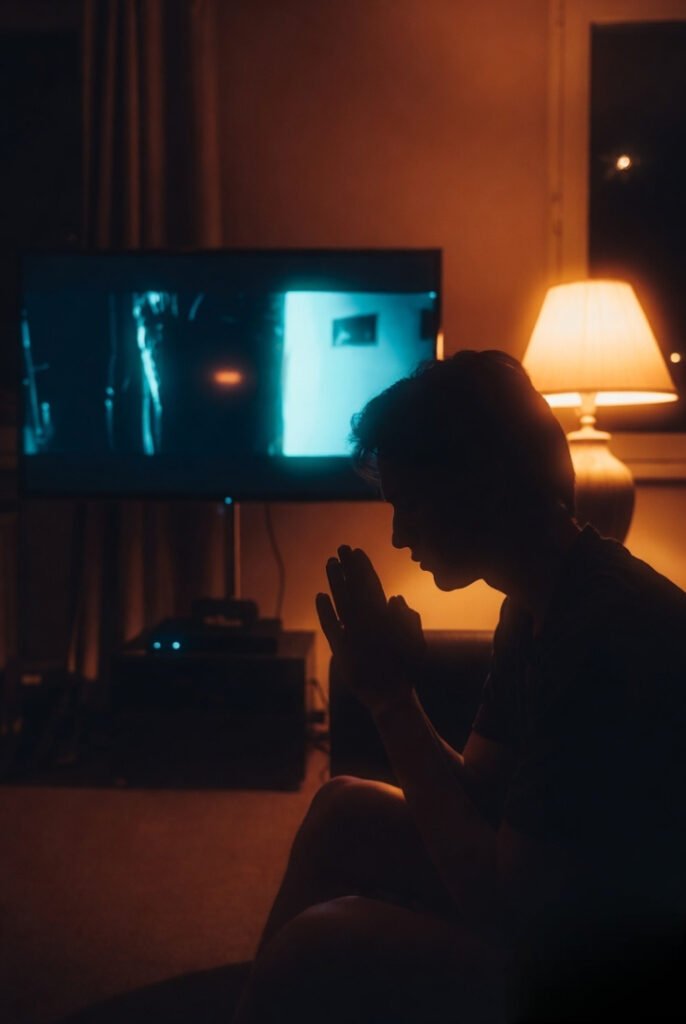
I sat on my couch — Netflix paused mid-episode — and said it slowly.
Not rushing.
Not mumbling.
And when I got to the line about “the wickedness and snares,” I thought about the specific traps in my own life.
Comparison.
Resentment.
Fear.
Pride (ugh, that one stings).
And I asked for protection.
Not in a theatrical way.
Just… help.
I slept better that night.
Coincidence? Maybe.
But something shifted.
H2: When to Say the St. Michael Prayer (Spoiler: More Often Than You Think)
People always ask, “When should I say the St. Michael Prayer?”
Here’s my very unofficial, very lived-in answer:
1. When You Feel Spiritually Attacked
That might sound dramatic, but you know those days when everything feels heavier than it logically should?
Like:
- You’re unusually tempted.
- You’re snapping at people for no reason.
- Negative thoughts won’t shut up.
That’s when I say it.
Because spiritual protection prayer isn’t about paranoia — it’s about awareness.
2. After Mass
Historically, the St. Michael Prayer was said after Low Mass in the Catholic Church. It became a tradition for a reason.
You’ve just received grace. Why not ask for protection as you go back into the world?
Which, let’s be honest, can be… a lot.
3. Before Big Decisions
I’ve prayed it before job interviews.
Before hard conversations.
Before traveling.
Not because I expect dramatic lightning bolts.
But because clarity matters.
H3: Is It Only for Catholics?
Short answer? No.
While the Prayer to St. Michael is rooted in Catholic tradition, anyone who believes in spiritual warfare or wants protection can pray it.
You don’t need a membership card.
You just need sincerity.
The Part That Used to Make Me Uncomfortable
Okay. Confession time.
The line about casting Satan into hell used to make me uneasy.
It felt… aggressive.
But then I realized something.
The St. Michael Prayer isn’t about hatred.
It’s about boundaries.

It’s saying: evil doesn’t get to have authority here.
And that’s powerful.
Especially in a culture that sometimes pretends evil is just a “difference of opinion.”
H2: Why This Prayer Feels Weirdly Relevant Today
The St. Michael Prayer was written in the 19th century.
And yet it feels like it was written yesterday.
Because distraction is louder.
Temptation is easier.
Anger spreads faster.
Sometimes it feels like we’re swimming upstream in a river of noise.
And this prayer?
It’s like planting your feet.
It reminds me that spiritual life isn’t passive.
It’s active.
A Slightly Awkward Story (Because I Promised Realness)
Back in high school, I once tried to sound super holy in a youth group prayer circle.
I used big words. Long pauses. Dramatic tone.
Afterward, my friend leaned over and whispered, “Were you auditioning for something?”
I wanted to disappear.
That’s what I love about the St. Michael Prayer now.
It’s direct. Clear. Strong.
No fluff.
You don’t have to improvise.
You just pray it.
H3: How I Personally Pray the St. Michael Prayer
Sometimes I pray it exactly as written.
Sometimes I pause between lines and insert specifics.
“Defend us in battle” — against what battle?
Against impatience today.
Against bitterness creeping in.
It becomes personal.
Alive.
If You’re Skeptical, I Get It
I used to roll my eyes at anything that sounded overly intense about spiritual warfare.
But then life got real.
And I realized ignoring the battle doesn’t make it disappear.
The St. Michael Prayer isn’t fear-based.
It’s confidence-based.
It acknowledges that there’s a fight — but also that we’re not fighting alone.
A Couple Resources If You’re Curious
If you want deeper theological background, you could check out:
- The Catholic Encyclopedia entries on St. Michael
- Articles from EWTN (ewtn.com) about the history of the prayer
Not light bedtime reading, but solid.
So… Should You Start Saying It?
I can’t tell you what to do.
But I can tell you this:
The St. Michael Prayer has become one of those anchor habits for me.
Not dramatic.
Not mystical.
Just steady.
It reminds me that faith isn’t just comfort — it’s courage.
And in a world that feels spiritually noisy, courage matters.
So if you ever feel overwhelmed, tempted, discouraged, or just spiritually “off” — try it.
Say it slowly.
Mean it.
And see what happens.
Because sometimes the oldest prayers carry the sharpest swords.
And honestly?
We could use a little more protection out here.